
Smart Thermostat vs Programmable Thermostat: Which Is Better?
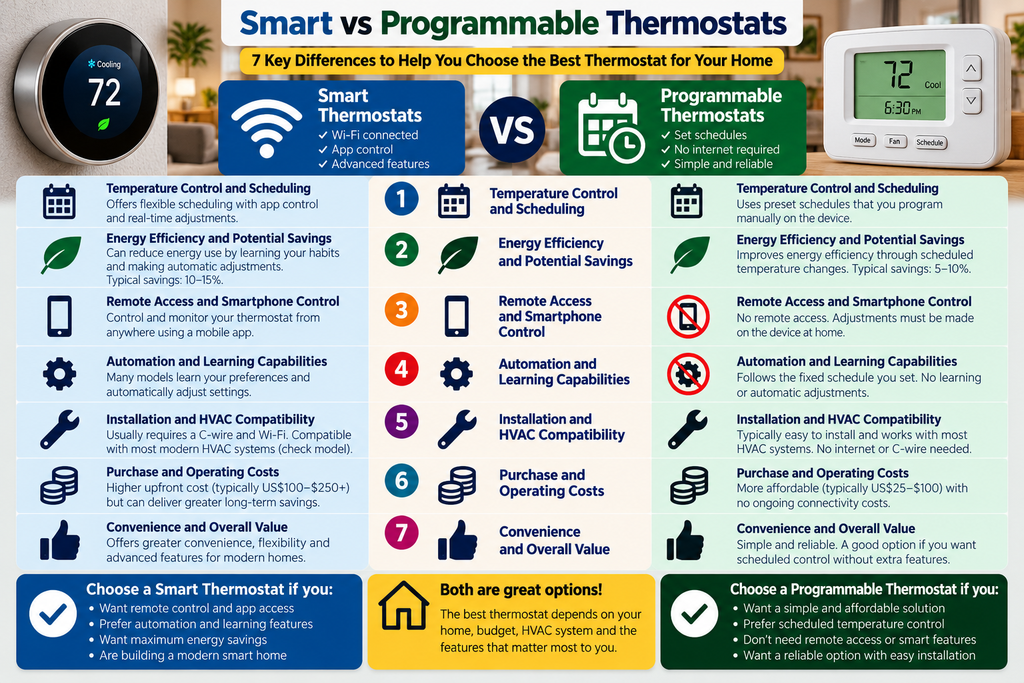
Smart vs programmable thermostats is an important comparison for homeowners looking to improve indoor comfort, manage heating and cooling schedules, and reduce unnecessary energy consumption. Smart thermostats offer features such as remote control, automation and, in some models, learning capabilities, while programmable thermostats follow schedules set by the user. Understanding their differences in convenience, energy efficiency, installation and costs can help you choose the best thermostat for your home.
Both smart vs programmable thermostats can help you control heating and cooling around a schedule, but they offer different levels of connectivity and automation.
A programmable thermostat lets you set temperature schedules in advance, while a smart thermostat can add features such as app control, remote access, smart-home integration and more advanced automation.
The better choice depends on how much control and connectivity you actually need.
Quick Verdict
Choose a smart thermostat if: you want remote control, smart-home integration and more flexible automation.
Choose a programmable thermostat if: you mainly want scheduled temperature control without needing a connected smart-home system.
At a Glance
| Feature | Smart Thermostat | Programmable Thermostat |
|---|---|---|
| Scheduled control | Yes | Yes |
| Remote/app control | Usually | Usually no |
| Smart-home integration | Often | Limited |
| Internet connection | Usually required for smart features | Generally not required |
| Setup complexity | Higher | Lower |
| Best suited to | Connected/automated homes | Straightforward scheduling |
Convenience and Control
Programmable thermostats can work well when your household follows a relatively predictable routine. Once the schedule is set, temperature changes can happen automatically at selected times.
Smart thermostats add greater flexibility. Depending on the model and system, you may be able to adjust settings remotely, create more advanced routines or integrate temperature control with other compatible smart-home devices.
Our view: Smart vs programmable thermostats: The Choice- A programmable thermostat can be sufficient when scheduling is all you need. A smart thermostat becomes more useful when remote access and wider home automation matter.
Which Should You Choose?
Choose smart if you value connected control, flexibility and integration with other smart-home devices.
Choose programmable if you mainly want reliable scheduled temperature control without adding another connected device.
Before buying either type Smart vs programmable thermostats, always check compatibility with your existing heating or cooling system.
Energy Savings with Smart and Programmable Thermostats: When comparing smart vs programmable thermostats, energy efficiency is an important consideration. Both technologies can help reduce unnecessary heating and cooling by adjusting temperatures according to household schedules. Smart thermostats may offer additional features such as remote control, occupancy detection and automated temperature adjustments. For independent guidance on energy-efficient temperature control, explore the ENERGY STAR Smart Thermostats Guide.
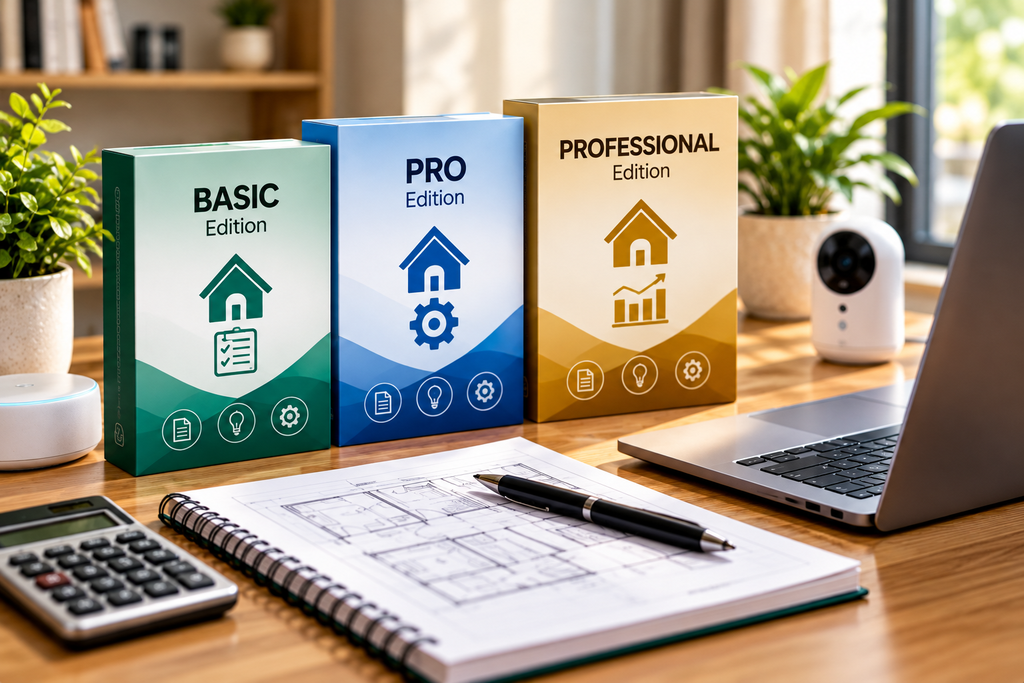
Planning a Smarter, More Energy-Efficient Home?
Choosing between smart and programmable thermostats is part of improving home comfort and energy efficiency. Prioritize upgrades and manage your budget with our Home Upgrade Planning Toolkit.
Explore Smart Thermostats
Learn more about smart temperature control, compatibility and the features worth considering before choosing a thermostat for your home.