
Explore smart thermostats designed to give you more convenient control over home heating and cooling. Learn how connected thermostats work, which features matter and how scheduling, remote controls and automation can help you manage indoor comfort and household energy use more effectively.
How Smart Thermostats Work
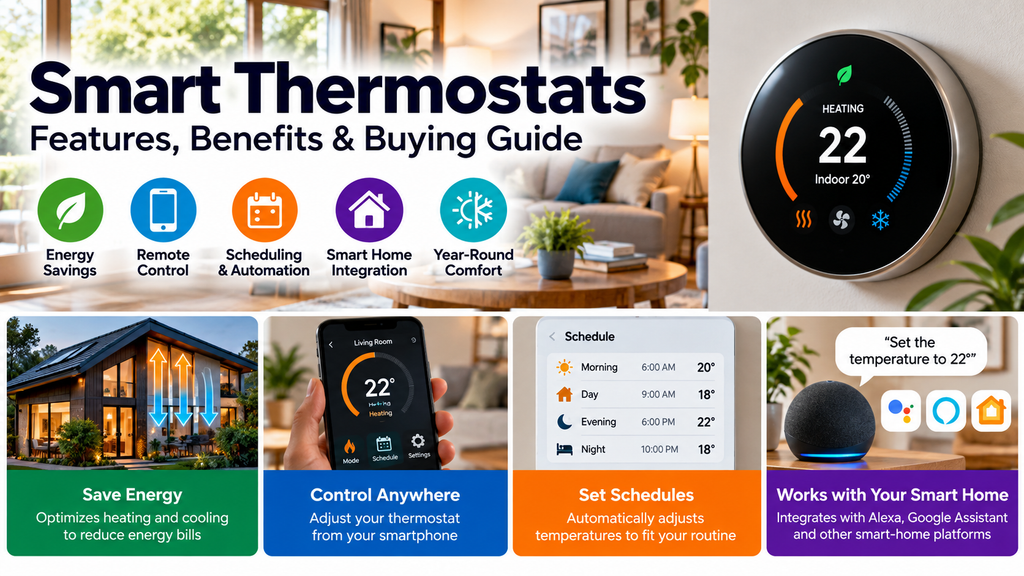
A smart thermostat connects compatible heating and cooling equipment to digital controls that may include an app, schedules, sensors and smart-home automation. Features vary between models, so compatibility with your existing HVAC or heating system should be checked before choosing or installing a thermostat.
Wi-Fi & App-Controlled Thermostats
Wi-Fi thermostats can provide remote access through a compatible app, allowing you to view or adjust temperature settings when connected. Depending on the model, the app may also provide schedules, alerts and information about heating or cooling activity.
Programmable Schedules
Smart thermostats can automate temperature settings according to household routines. Creating schedules for different times of day can reduce unnecessary heating or cooling while maintaining comfortable settings when rooms are occupied.
Learning Smart Thermostats
Some learning thermostats can use temperature adjustments, occupancy information and other inputs to help create automated schedules. The level of automation differs between products, so consider whether you prefer automatic adjustments or greater manual control.
Smart Sensors & Room Control
Compatible room sensors can provide additional temperature or occupancy information from different parts of the home. Some thermostat systems use this information to prioritize particular rooms or adjust heating and cooling according to household activity.
Smart thermostat energy-saving tip: Smart thermostats can help manage heating and cooling costs by automatically adjusting temperatures based on your schedule and preferences. When choosing a model, look for energy-efficient options and check compatibility with your existing heating and cooling system. Learn more about ENERGY STAR certified smart thermostats.
Important Smart Thermostat Features to Compare
HVAC & System Compatibility
Before choosing a smart thermostat, check that it is compatible with your heating and cooling equipment, electrical requirements and existing thermostat wiring. Some systems may require additional wiring or professional installation.
Scheduling, Automation & Remote Control
Compare how easily you can create schedules, make remote adjustments and integrate the thermostat into household routines. Useful automation should make temperature control simpler rather than unnecessarily complicated.
Energy Monitoring & Usage Information
Some smart thermostats provide reports or estimates showing heating and cooling activity over time. These features can help you understand usage patterns, although the information available and how it is calculated vary between products.
Smart Thermostat Products & Buying Guides
Choosing the right smart thermostat depends on your heating and cooling system, existing wiring, household routines and the level of automation you want. Our buying guides will help you compare practical options based on compatibility, controls, scheduling, sensors, smart-home integration and energy-monitoring features.
Wi-Fi Smart Thermostat
Compare Wi-Fi smart thermostats with app controls, scheduling and remote temperature management for compatible home heating and cooling systems.
Learning Smart Thermostat
Explore learning smart thermostats designed to use household routines, temperature adjustments and compatible sensors to support more automated climate control.
Smart ThermostatWith Room Sensors
Discover smart thermostats with room sensors that can provide additional temperature or occupancy information from different areas of the home.
Smart or Programmable Thermostat?
Choosing between a smart thermostat and a programmable thermostat depends on how much control and automation you want. A programmable thermostat can handle straightforward temperature schedules, while a smart thermostat can add features such as remote app control, smart-home integration and more flexible automation. Our Smart Thermostat vs Programmable Thermostat comparison explains the key differences to help you decide which approach better suits your home.
Compare Smart vs Programmable Thermostats →
Planning a Smarter, More Comfortable Home?
Smart thermostats help improve comfort and manage energy use. Plan your upgrades, prioritize improvements and control your budget with our Home Upgrade Planning Toolkit.
Frequently Asked Questions About Smart Thermostats
What does a smart thermostat do?
A smart thermostat provides connected control over compatible heating and cooling equipment. Depending on the model, features may include remote app controls, schedules, sensors, automated adjustments and information about heating or cooling activity.
Will a smart thermostat work with my existing heating and cooling system?
Compatibility varies between thermostats and HVAC systems. Check the thermostat manufacturer’s compatibility information, your existing wiring and the specifications of your heating or cooling equipment before purchasing or installing a smart thermostat.
Do smart thermostats need Wi-Fi?
Many smart thermostats use Wi-Fi for remote app controls, software updates and connected features. Basic temperature control may still operate locally on some models if internet access is unavailable, but functionality varies by product.
Can a smart thermostat reduce energy consumption?
A smart thermostat does not automatically guarantee lower energy use. Scheduling, temperature management and usage information can help households manage heating and cooling more deliberately, but actual energy consumption depends on settings, equipment, climate, building characteristics and household behavior.
Can I install a smart thermostat myself?
Installation difficulty depends on the thermostat, existing wiring and heating or cooling system. Some installations may be straightforward for suitable systems, while others require additional wiring or professional installation. Follow the manufacturer’s instructions and use a qualified technician where required.