

Wireless vs Wired Security Cameras: Which Is Better for Your Home?
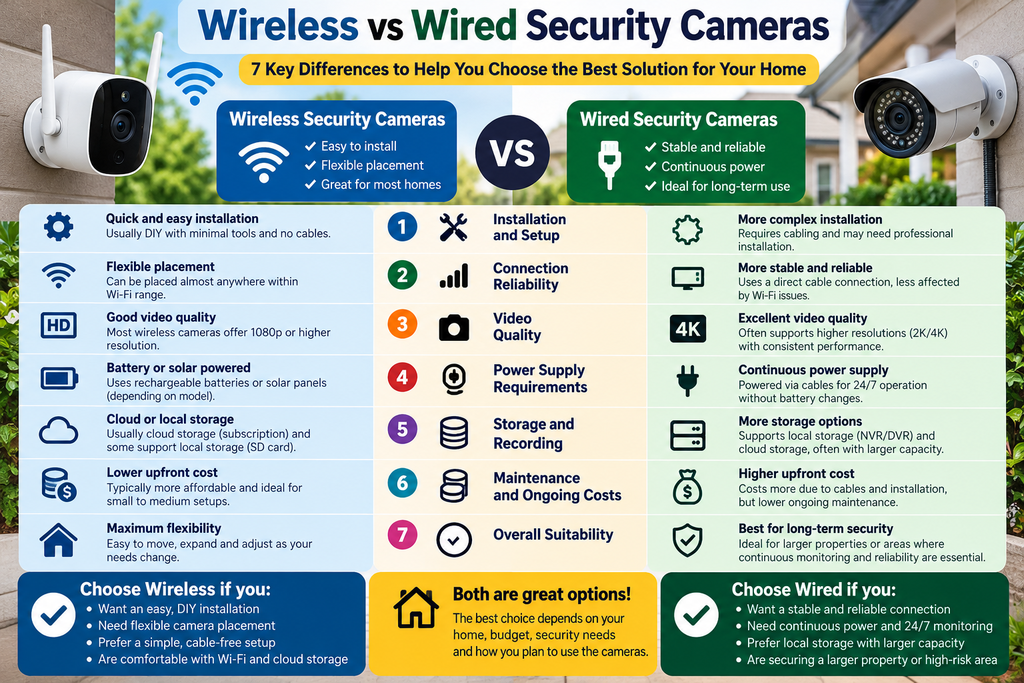
Choosing between wireless and wired security cameras usually comes down to a trade-off between installation flexibility and dependable connectivity.
Key difference between wireless vs Wired Security Cameras is that Wireless cameras can be easier to position and expand, while wired cameras can provide a more permanent connection for areas where continuous monitoring matters.
The better choice depends on your property, available power and network connections, where you want the cameras installed, and how much installation work you are prepared to undertake.
Quick Verdict
Choose wireless security cameras if: you want easier installation, greater placement flexibility and the ability to expand or reposition your system more easily.
Choose wired security cameras if: you want a more permanent installation and prefer not to depend primarily on wireless connectivity or routine battery charging.
Comparison table
Wireless vs Wired Security Cameras at a Glance
| Feature | Wireless Cameras | Wired Cameras |
|---|---|---|
| Installation | Generally easier | More installation work |
| Placement | More flexible | Depends on cabling |
| Connectivity | Usually Wi-Fi | Wired network/system connection |
| Power | Battery or wired power, depending on model | Usually continuous wired power |
| Maintenance | Batteries may require charging/replacement | Less battery management |
| Expansion | Usually easier | May require additional cabling |
Installation and Placement
Wireless cameras are useful where running new cables would be inconvenient. They can also make it easier to change camera positions as your security needs change.
Wired cameras require more planning because cable routes and power/network connections need to be considered. Once installed, however, they can provide a more permanent security setup.
Our view: Making a Case for wireless vs Wired Security Cameras: Wireless has the advantage for flexibility and simpler installation. Wired systems make more sense where you are planning a permanent multi-camera installation.
Which Should You Choose?
Choose wireless for apartments, rented properties, smaller homes or locations where installing cables would be difficult.
Choose wired when building a more permanent security system, particularly where several fixed cameras will monitor important areas continuously.
Some homes may benefit from a combination of both wireless vs Wired Security Cameras rather than treating the decision as strictly one or the other.
Security considerations for home cameras: When comparing wireless vs wired security cameras, consider cybersecurity alongside installation, video quality and reliability. Protect your camera system with strong passwords, regular software updates and secure network settings. For additional guidance, read the FTC’s advice on securing home security cameras.

Planning Your Home Security Upgrade?
Whether you choose wireless or wired cameras, a good security plan matters. Prioritize coverage, plan equipment purchases and manage your budget with our Home Upgrade Planning Toolkit.
Explore Smart Security Cameras
Learn more about security camera features, installation considerations and the options available for protecting different areas of your home.