
Explore smart lighting solutions that give you more convenient control over lights throughout your home. From smart bulbs and switches to automated lighting routines, learn how connected lighting works, which features matter and how to choose products that fit your rooms, existing fixtures and wider smart-home setup.
How Smart Lighting Works
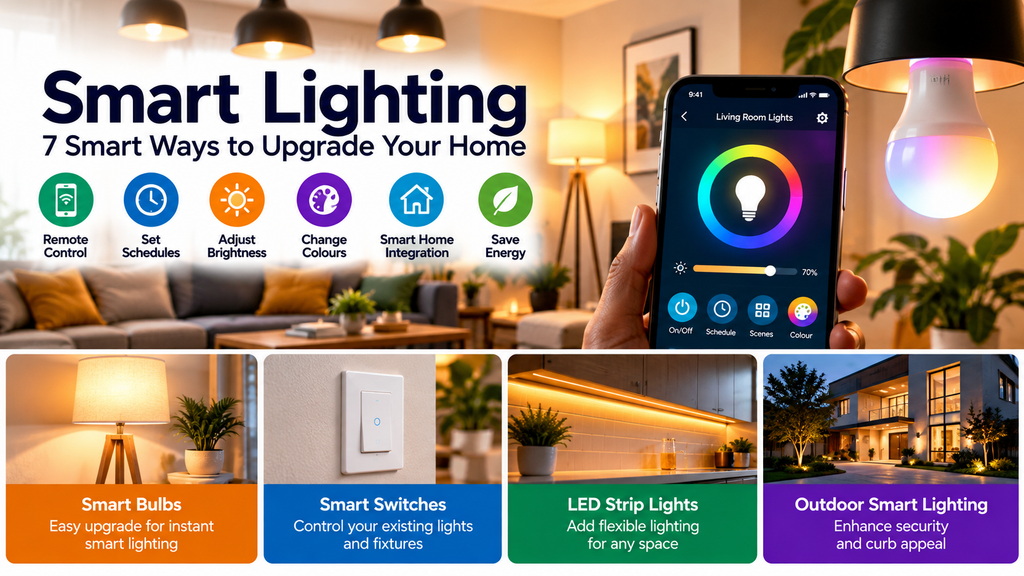
Smart lighting combines connected bulbs, switches or other lighting controls with apps, voice assistants or automation systems. Depending on the product, you may be able to control lights remotely, create schedules, adjust brightness or color and include lighting in broader smart-home routines.
Smart lighting energy-saving tip: When upgrading your home lighting, consider energy-efficient LED bulbs alongside smart controls and automated schedules. LEDs can reduce electricity consumption compared with traditional incandescent bulbs. For more information, explore the U.S. Department of Energy’s guide to LED lighting.
Smart Bulbs
Smart bulbs replace compatible conventional bulbs and can provide app-based or voice-controlled lighting without requiring a separate wall control. Compare bulb fitting, brightness, color options, connectivity and compatibility with the smart-home platforms you already use.
Smart Light Switches
Smart light switches provide connected control at the wall and can be useful where several bulbs are controlled by the same switch. Installation requirements vary, so check wiring requirements, fixture compatibility and whether professional installation is appropriate.
Smart Dimmers
Smart dimmer switches allow compatible lighting to be adjusted remotely or through automated routines. Before choosing one, check that the light fixtures and bulbs support dimming and meet the manufacturer’s electrical and compatibility requirements.
Smart Lighting Automation
Schedules, routines and compatible sensors can automate when lights turn on, turn off or change brightness. Useful smart lighting automation should support the way rooms are actually used rather than adding unnecessary complexity.
Important Smart Lighting Features to Compare
Conectivty & Compatblty
Smart lighting products may connect through Wi-Fi, Bluetooth or other smart-home protocols. Check compatibility with your existing smart-home platform, hub or voice assistant before purchasing products intended to work together.
Brightness, Color & Controls
Compare brightness, adjustable white tones, color options and dimming capabilities according to where the light will be used. Bedrooms, kitchens, work areas and living spaces can have different lighting requirements.
Scheduling & Remote Control
App controls can allow compatible smart lights to be managed remotely and placed on schedules or routines. Consider whether these controls are easy to use and whether they provide practical benefits for your household.
Smart Lighting Products & Buying Guides
Choosing the right smart lighting products depends on how you want to control your lights, the fixtures already installed in your home and the smart-home platform you use. Our buying guides will help you compare practical options based on compatibility, connectivity, brightness, automation features and ease of installation.
Smart Bulbs
Compare smart bulbs for bedrooms, living areas, kitchens and other spaces, including options with dimming, adjustable white light, color control and smart-home integration.
Smart Switches & Dimmers
Explore smart switches and dimmers for connected lighting control at the wall, with attention to wiring requirements, lighting compatibility and smart-home integration.
Smart Lighting Systems
Discover smart lighting systems that can connect multiple lights, controls and compatible accessories for coordinated lighting and household automation.
Smart Bulbs or Smart Switches?
Choosing how to make your lighting smarter often starts with deciding between smart bulbs and smart switches. Smart bulbs can offer an easy way to control individual lights and access features such as dimming or colour changes, while smart switches can provide a more permanent solution that keeps familiar wall controls in place. Our Smart Bulbs vs Smart Switches comparison looks at installation, everyday use and control options to help you decide which approach better suits your home.
Compare Smart Bulbs vs Smart Switches →
Planning a Smarter Home Lighting Upgrade?
Smart lighting can improve comfort, convenience and energy efficiency. Plan your lighting upgrades, prioritize improvements and manage your budget with our Home Upgrade Planning Toolkit.
Frequently Asked Questions About Smart Lighting
Do smart lights need Wi-Fi?
Not always. Some smart lights connect directly through Wi-Fi, while others may use Bluetooth or another smart-home communication protocol. Check the product’s connectivity requirements and whether a compatible hub or controller is needed.
Can I use smart bulbs in existing light fixtures?
Many smart bulbs are designed for compatible existing fixtures, but you should check the bulb fitting, voltage, fixture requirements and manufacturer specifications before installation.
What is the difference between a smart bulb and a smart switch?
A smart bulb adds connected controls to the individual bulb, while a smart switch provides connected control from the wall. The appropriate option depends on the number of lights being controlled, existing wiring and how you want household members to operate the lighting.
Can smart lighting work with voice assistants?
Many smart lighting products support compatible voice-assistant and smart-home platforms. Compatibility varies between products, so check the manufacturer’s supported platforms before purchasing.
Can smart lights operate automatically?
Compatible smart lighting can use schedules, routines, sensors or other smart-home devices to trigger lighting automatically. Available automation options depend on the lighting product and the platform controlling it.