
15 Smart Home Lighting Ideas to Make Your Home More Comfortable and Energy Efficient
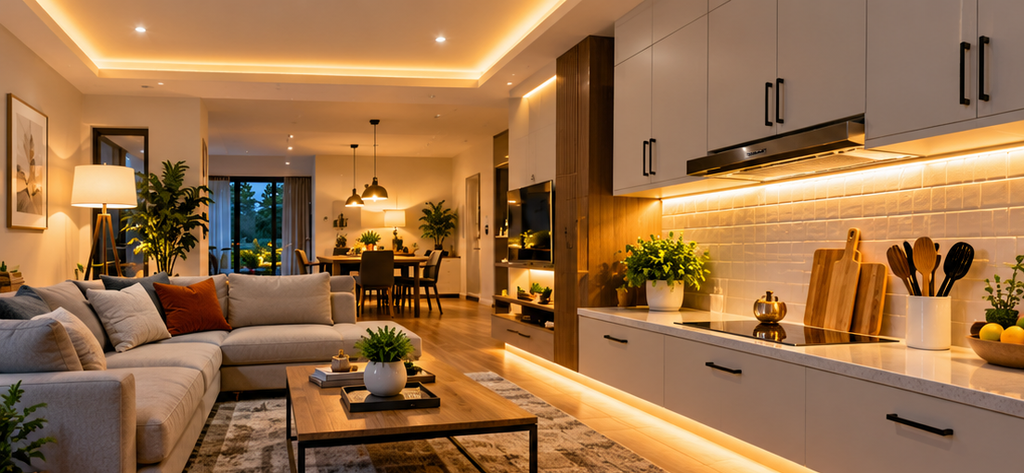
Smart home lighting is one of the easiest ways to make a home more comfortable, convenient and attractive. From motion-activated hallway lights to adjustable living room lighting, today’s smart lighting ideas offer more flexibility than traditional switches and bulbs.
You don’t necessarily need expensive renovations or a complete home automation system to get started.
In this guide, we’ll explore 15 practical smart home lighting ideas for living rooms, bedrooms, kitchens, bathrooms, outdoor spaces and home security.
Whether you’re upgrading a single room or planning a larger smart home project, these ideas can help you choose lighting improvements that suit your lifestyle and budget.
1. Install Smart LED Bulbs in Your Living Room
Smart LED bulbs are an accessible starting point for home automation.
Depending on the product, they can allow you to adjust brightness, change color temperature, create lighting schedules and control lights through a smartphone.
Some systems also support voice assistants such as Amazon Alexa or Google Home.
Practical idea: Create separate smart home lighting ideas and settings for watching television, entertaining guests and relaxing in the evening.
Best for: Living rooms, family rooms and apartments.
2. Use Motion Sensor Lighting in Hallways
Walking through a dark hallway at night can be inconvenient, particularly when carrying items.
Motion-activated lights can illuminate hallways automatically when movement is detected.
Depending on the system, they can switch off after a preset period, reducing unnecessary operation.
Consider low-brightness night settings to avoid disturbing other household members.
Best for: Hallways, corridors and staircases.
3. Add Smart Under-Cabinet Kitchen Lighting
Good Kitchen smart home lighting ideas should support safe and convenient food preparation.
Under-cabinet LED strips or fixtures can illuminate worktops that may otherwise be shadowed by overhead cabinets.
Smart-compatible systems may allow adjustable brightness, scheduled operation and convenient controls.
Choose products appropriate for kitchen conditions and install them according to manufacturer instructions.
Best for: Food preparation counters, kitchen islands and workspaces.
4. Create Relaxing Bedroom Lighting
Bedroom lighting should support different activities, including reading, dressing and winding down.
Dimmable smart bulbs can help create softer lighting in the evening.
Some systems allow warmer light settings and automated bedtime routines.
For example, a scheduled routine could gradually reduce brightness before bedtime.
Practical idea: Use separate bedside lamps so each person can adjust lighting independently.
5. Install Smart Outdoor Security Lights
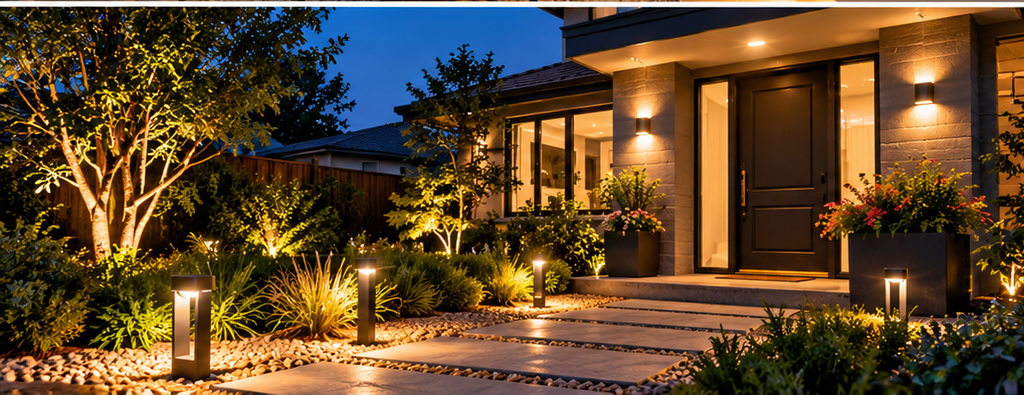
Outdoor lighting can improve visibility around entrances, pathways and other areas of a property.
Motion-activated floodlights may illuminate when movement is detected, while smart-controlled lights can operate on schedules.
Some systems integrate with compatible security cameras or home automation platforms.
Position lights to illuminate useful areas without unnecessarily disturbing neighbors.
Best for: These smart home lighting ideas are best for Entrances, driveways, gates and garden pathways.
6. Use Smart Lighting to Simulate Occupancy
Certain smart home lighting ideas can operate automatically while you’re away from home.
For example, selected lamps may switch on and off at different times to give the appearance of normal household activity.
This can form part of a broader home security routine.
However, automated lighting is not substitute for secure doors, appropriate locks, alarms or other protective measures and excluded from smart home lighting ideas.
Practical idea: Use varied schedules rather than leaving the same light on continuously.
Energy-saving tip: Smart home lighting ideas can also help reduce unnecessary electricity consumption when combined with efficient LED bulbs and appropriate scheduling. For more guidance, see the U.S. Department of Energy’s guide to LED lighting.
7. Add LED Strip Lighting Behind Your Television
LED strips can provide subtle background illumination around a television or entertainment unit.
Some products offer adjustable colors and brightness, while others can synchronize with compatible entertainment systems.
Use lighting designed for the intended installation location and avoid obstructing equipment ventilation.
Best for: Living rooms and entertainment spaces.
8. Smart Home Lighting Ideas For Your Home Office
A well-lit workspace can make reading, computer work and other tasks more comfortable.
Smart desk lamps may offer adjustable brightness and color temperature.
Some allow preset lighting modes for focused work or relaxed evening use.
Position lighting to minimize reflections and glare on computer screens.
Best for: Home offices, study areas and workstations.
9. Use Motion-Activated Bathroom Lighting
Bathroom lighting can be especially useful during nighttime visits.
Motion-activated fixtures or suitable low-level night lights can provide illumination without requiring you to search for a switch.
Bathrooms require special attention to moisture exposure and electrical safety.
Choose fixtures suitable for their installation zones and use a qualified electrician where necessary.
Best for: These Smart home lighting ideas are best for Bathrooms and adjoining corridors.
10. Illuminate Staircases With Smart LED Lighting
Staircase lighting can improve visibility, particularly in homes with multiple levels.
LED strips installed along suitable staircase edges or walls can provide additional illumination.
Motion sensors may activate lighting when someone approaches.
Avoid placing fixtures where they create glare or interfere with safe movement.
Practical idea: Combine low-level staircase lighting with adequate conventional lighting.
11. Create Smart Garden and Patio Lighting
Outdoor lighting can make patios, gardens and seating areas more inviting.
Suitable smart outdoor lighting systems may support timers, adjustable brightness and different lighting scenes.
For example, you could create brighter settings for outdoor activities and softer lighting for evening relaxation.
Ensure products are rated for outdoor use and protected against the environmental conditions they will encounter.
12. Introduce Voice-Controlled Lighting
Voice-controlled lighting can make it easier to operate compatible lights without reaching for switches or smartphones.
Supported smart speakers and assistants may allow commands such as turning off bedroom lights or adjusting living room brightness.
Compatibility varies between manufacturers and platforms.
Before purchasing, confirm that the lighting products work with your preferred ecosystem.
Best for: Convenience, accessibility and everyday home routines.
13. Automate Lighting With Daily Schedules
Lighting schedules can help simplify daily household routines.
For example, you might schedule entrance lights to turn on around sunset and switch off later in the evening.
Some systems support sunrise and sunset automation based on location settings.
Scheduling can also reduce the likelihood of lights being left on unnecessarily, although actual energy savings depend on the products and usage patterns.
Practical idea: Begin with two or three useful schedules rather than automating every light immediately.
14. Upgrade to Smart Light Switches
Smart switches can provide connected control of existing lighting circuits without necessarily replacing every bulb.
Depending on the product, features may include remote control, scheduling and integration with compatible smart-home systems.
However, electrical wiring requirements vary. Some switches require a neutral wire or specific installation arrangements.
Important: Have a qualified electrician assess compatibility and carry out installation where required.
15. Build Lighting Scenes for Different Activities
One of the most useful smart lighting features is the ability to group compatible lights into scenes.
A lighting scene can adjust several fixtures together to create a particular atmosphere.
Examples include:
- Movie Night: Dim living room lights and activate subtle background lighting.
- Dinner Time: Use comfortable lighting around the dining area.
- Good Morning: Gradually brighten selected lights.
- Away Mode: Operate selected lights according to a planned schedule.
- Bedtime: Switch off unnecessary lights and retain suitable hallway illumination.
Lighting scenes can make a smart-home system feel more practical and coordinated.
Best Smart Lighting Ideas by Room
| Area | Smart lighting solution | Main benefit |
|---|---|---|
| Living room | Smart LED bulbs | Adjustable atmosphere |
| Kitchen | Under-cabinet lighting | Better task visibility |
| Bedroom | Dimmable smart bulbs | Personalized comfort |
| Hallway | Motion sensor lights | Convenient nighttime movement |
| Staircase | Low-level LED lighting | Improved visibility |
| Bathroom | Suitable motion-activated lights | Nighttime convenience |
| Home office | Adjustable smart desk lamp | Flexible task lighting |
| Entrance | Motion-activated outdoor lighting | Visibility and security support |
| Garden | Smart outdoor lights | Convenient outdoor illumination |
How to Choose the Right Smart Home Lighting System
Before buying smart lighting products, consider five important factors.
1. Compatibility
Check whether the product works with your preferred smart-home ecosystem, such as Alexa, Google Home, Apple Home or another supported platform.
Some products require a separate hub, while others connect directly through Wi-Fi, Bluetooth or supported smart-home protocols.
2. Installation requirements
Smart bulbs are generally simpler to install than hardwired switches and fixtures.
For switches and permanent electrical installations, confirm wiring requirements and use appropriately qualified professionals.
3. Internet and connectivity
Some smart lighting features depend on internet access, while others may operate locally.
Review what happens if your internet connection becomes unavailable.
4. Energy consumption
LED lighting is generally more energy-efficient than older incandescent lighting.
Smart scheduling and occupancy controls may further reduce unnecessary lighting use.
However, smart devices can also consume standby power, so actual savings vary.
5. Budget
Start with lighting improvements that solve immediate household problems.
For example, hallway motion lighting or kitchen task lighting may deliver more practical value than decorative lighting throughout the entire home.
How Much Does Smart Home Lighting Cost?
The cost of smart lighting depends on the type of product, brand, compatibility features and installation requirements.
A basic project may involve replacing a few conventional bulbs with compatible smart LED bulbs.
A more advanced project could include smart switches, outdoor lighting, motion sensors, a hub and professional electrical installation.
To control spending, divide your project into phases:
- Identify the rooms that need better lighting.
- Decide which features are essential.
- Compare product compatibility and installation requirements.
- Set a realistic budget.
- Install and test improvements before expanding the system.
This phased approach helps avoid buying products that may not work well together.
Common Smart Lighting Mistakes to Avoid
Even relatively simple lighting projects can become unnecessarily expensive or complicated.
Common mistakes include buying incompatible products, overlooking Wi-Fi coverage, installing unsuitable fixtures in wet areas and creating too many automated routines.
Another frequent mistake is choosing decorative lighting before addressing practical lighting needs.
Prioritize adequate illumination, convenience and safe installation before adding advanced effects.
Plan Your Smart Home Lighting Upgrade
Smart lighting works best when it forms part of a practical home improvement plan.
Before purchasing equipment, identify the rooms you want to improve, the functions you need and the budget available.
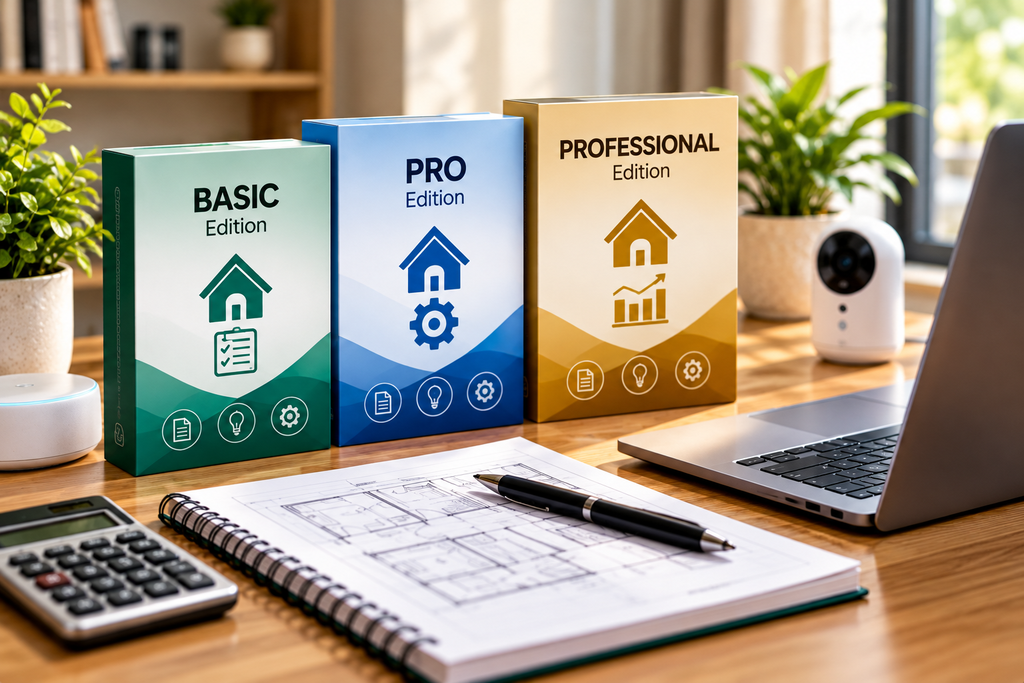
Our Home Upgrade Planning Toolkit is designed to help homeowners prioritize improvements, plan spending and organize home upgrade projects.
Whether you’re starting with a few smart bulbs or planning a larger home automation project, a structured approach can help you make more informed decisions.
Frequently Asked Questions
What is the easiest way to start using smart lighting?
Replacing a compatible conventional bulb with a smart LED bulb is often one of the simplest starting points. Check the fitting, electrical specifications and connectivity requirements before purchasing.
Do smart lights work without Wi-Fi?
Some smart lights can operate through local controls, Bluetooth or compatible hubs. Others require Wi-Fi or internet access for particular features. Check the manufacturer’s specifications.
Can smart lighting reduce electricity bills?
Efficient LED bulbs, schedules and motion controls may reduce electricity consumption compared with less efficient lighting or lights left on unnecessarily. Savings depend on usage patterns and equipment.
Is smart lighting suitable for older homes?
Many older homes can use smart bulbs, but smart switches and hardwired fixtures may have specific wiring requirements. An electrician can help assess suitability.
Are smart lights useful for home security?
Scheduled and motion-activated lighting can improve visibility and support broader home security measures. They should not be relied upon as a complete security system.
Final Thoughts
Smart home lighting can make everyday life more convenient while improving the appearance and functionality of your home.
You don’t need to automate every room immediately. Start with useful improvements such as living room smart bulbs, kitchen task lighting or motion-activated hallway lights.
As your needs and budget develop, you can expand into coordinated lighting scenes, outdoor automation and integrated smart-home controls.
The most effective smart lighting system is one that fits your household’s needs, operates reliably and remains easy to use.