
Explore robot vacuums designed to automate routine floor cleaning and reduce the amount of hands-on work needed to manage everyday dust and debris. Learn how robot vacuum cleaners navigate the home, compare important features and understand what to consider when choosing a model for carpets, hard floors, pets and different home layouts.
How Robot Vacuum Cleaners Work
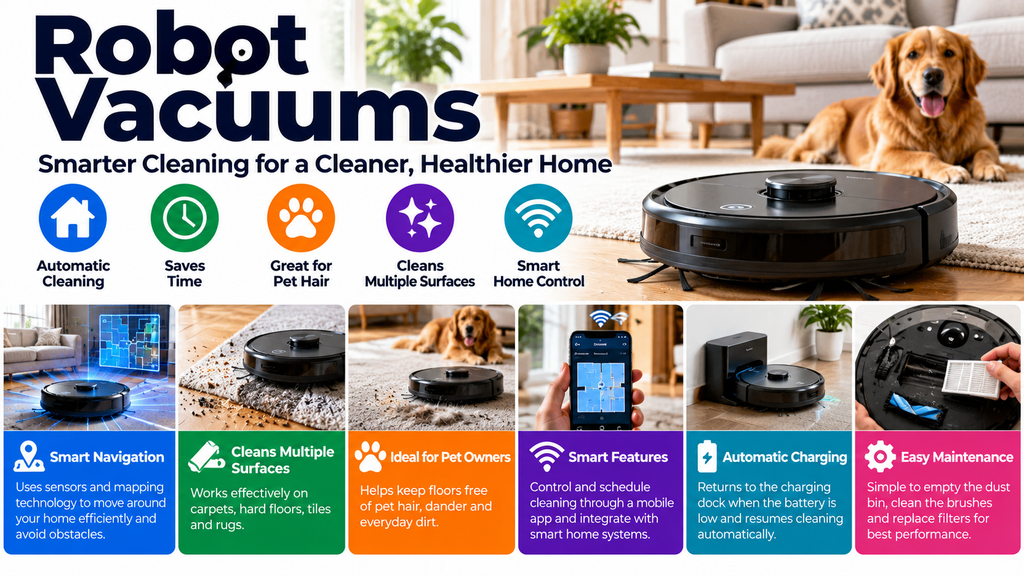
Robot vacuum cleaners use sensors and navigation technology to move around floors while collecting dust and debris. Features vary considerably between models, from basic automated movement to detailed room mapping, scheduled cleaning, obstacle detection and automatic docking. Understanding these differences can help you focus on features that are useful for your particular home.
Navigation & Mapping
Robotic vacuums can use different combinations of sensors, cameras or laser-based navigation to move through the home. More advanced models may create maps, recognize individual rooms and allow users to select specific areas for cleaning.
Carpet & Hard Floor Cleaning
Consider the flooring throughout your home when comparing vacuum robot cleaners. Some models are designed to transition between carpets and hard floors, while cleaning performance can vary according to suction, brush design and the height or type of floor covering.
Obstacle Detection & Home Layout
Furniture, cables, thresholds and other objects can affect automated cleaning. Compare how different robot vacuums detect or avoid obstacles and consider whether the device can move effectively between the rooms and floor surfaces in your home.
Automatic Charging & Docking
Most robotic vacuums return to a charging dock when cleaning is complete or battery power becomes low. Some models can resume cleaning after charging, while more advanced docking stations may also empty collected debris or perform additional maintenance functions.
Robots as vacuums and indoor air quality: Robot vacuum cleaners can help reduce accumulated dust, pet hair and everyday debris through regular automated floor cleaning. Models with effective filtration systems may also help limit the redistribution of fine particles during vacuuming. For additional guidance on maintaining a healthier indoor environment, explore the EPA’s recommendations for improving indoor air quality.
Important Robot Vacuum Features to Compare
Suction, Brushes & Cleaning Performance
Compare suction settings, brush design and cleaning modes according to the surfaces you need to maintain. Homes with carpets, hard floors or pets may have different cleaning requirements.
Battery Runtime & Coverage
Battery runtime affects how much floor area a robot vacuum can cover before recharging. Consider the size and layout of your home together with whether the device can recharge and automatically resume an unfinished cleaning session.
App Controls & Scheduling
Connected rob vacuums may allow you to schedule cleaning, select rooms, create restricted areas and review cleaning progress through an app. Focus on controls that genuinely support your routine rather than choosing a model solely because it offers more connected features.
Robot Vacuum Buying Guides
Choosing the right robotic vacuum depends on your flooring, home layout, cleaning expectations and the level of automation you want. Our buying guides will help you compare vacuum robot cleaners based on navigation, cleaning performance, battery runtime, maintenance requirements and useful automated features.
Robot Vacuums for Carpet & Hard Floors
Compare robot vacuums for carpets and hard floors, including models designed to transition between different surfaces and adjust cleaning according to floor type.
Robot Vacuums for Pet Hair
Explore robot vacuums for pet hair, with attention to brush design, suction, filtration, dust capacity and maintenance requirements in homes with pets.
Self-Emptying Robot Vacuums
Discover self-emptying robot vacuums with docking stations designed to transfer collected debris automatically and reduce how frequently the onboard dust bin needs to be emptied manually.

Planning a Smarter, Cleaner Home?
Robot vacuums simplify everyday cleaning and save valuable time. Prioritize smart cleaning upgrades, plan your purchases and manage your budget with our Home Upgrade Planning Toolkit.
Frequently Asked Questions About Robot Vacuums
Are robot vacuums worth it?
Robot vacuums can be useful for maintaining floors between more thorough cleaning sessions, particularly where dust and debris accumulate regularly. Their value depends on your home layout, flooring, cleaning expectations and how much routine maintenance the device requires.
Do robot vacuums work on carpets and hard floors?
Many robot vacuum cleaners are designed to clean both carpets and hard floors, although performance varies between models. Check floor compatibility, suction, brush design and how effectively the vacuum transitions between the different surfaces in your home.
Can robot vacuums clean around furniture and obstacles?
Robot vacuums use sensors and navigation systems to move around furniture and other objects, but obstacle-handling capability varies. Cables, small objects and difficult thresholds may still require attention depending on the model and home layout.
How often should I run a robot vacuum?
Cleaning frequency depends on household activity, flooring and how quickly debris accumulates. Some households use scheduled cleaning frequently in high-traffic areas, while others run the robot only when needed.
Do robot vacuums require regular maintenance?
Yes. Routine maintenance can include emptying the dust bin, cleaning brushes and sensors and checking wheels and filters. Self-emptying models can reduce some manual handling, but their docks and consumable components still require periodic attention.