

Robot Vacuum vs Traditional Vacuum: Which Is Better?
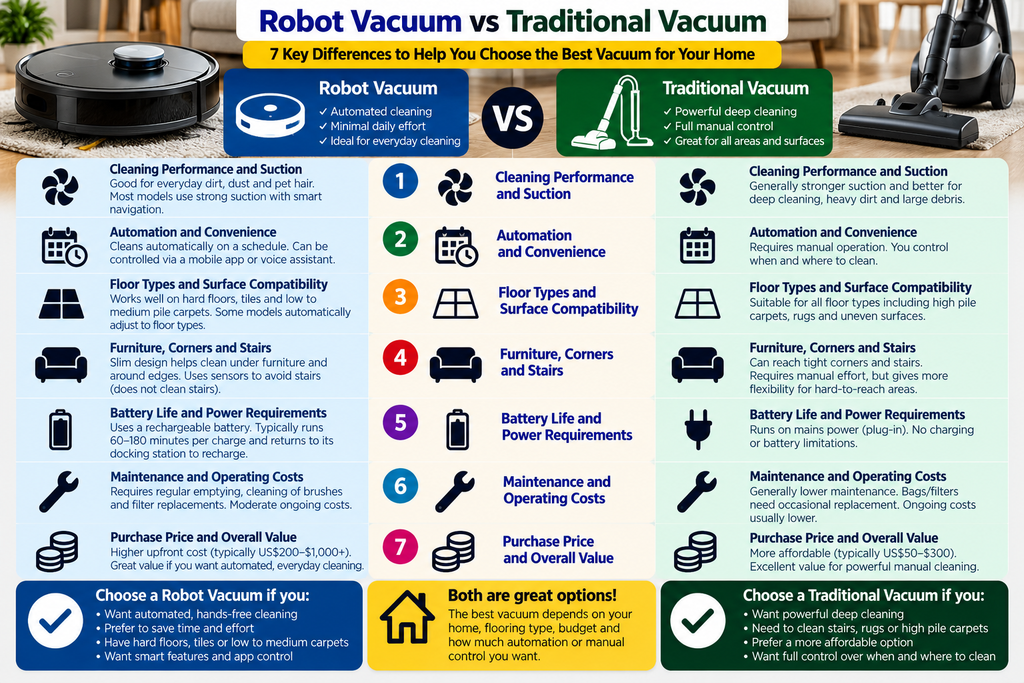
Robot vacuum vs traditional vacuum is an important comparison for homeowners looking for an effective and convenient way to keep their floors clean. Robot vacuums automate routine floor cleaning with minimal daily involvement, while traditional vacuum cleaners offer greater manual control and flexibility for deep cleaning, stairs and difficult-to-reach areas. Understanding the difference between Robot vacuum vs traditional vacuum in cleaning performance, convenience, maintenance and cost will help you choose the best vacuum cleaner for your home, flooring type and lifestyle.
Robot vacuums and traditional vacuum cleaners can both help keep floors clean, but they approach the job very differently.
A robot vacuum can automate routine floor cleaning with minimal day-to-day involvement, while a traditional vacuum gives you direct control over where, when and how thoroughly you clean.
The better choice depends on your flooring, home layout, cleaning routine and how much automation you want.
Quick Verdict
Choose a robot vacuum if: you want routine floor cleaning to happen automatically and your home layout is suitable for autonomous cleaning.
Choose a traditional vacuum if: you want greater control, more targeted cleaning and the flexibility to clean areas beyond accessible floor surfaces.
Robot vs Traditional Vacuum at a Glance
| Feature | Robot Vacuum | Traditional Vacuum |
|---|---|---|
| Cleaning approach | Automated | Manual |
| User involvement | Lower | Higher |
| Scheduled cleaning | Usually available | No |
| Targeted cleaning | More limited | Excellent |
| Furniture/obstacles | Requires suitable clearance/navigation | User controls access |
| Best suited to | Routine maintenance | Thorough & targeted cleaning |
Convenience and Cleaning
The main advantage of a robot vacuum is convenience. Many models can clean according to a schedule and return to their charging station automatically, helping maintain floors between more thorough cleaning sessions.
Traditional vacuums require more effort but give you direct control over difficult areas, edges, stairs, furniture and locations that a robot may not reach.
Our view: Robot vacuums are particularly useful for routine floor maintenance, while traditional vacuums remain more versatile for detailed cleaning.
Which Should You Choose?
Choose a robot vacuum if reducing routine cleaning effort is your main priority and your floors and room layout are suitable.
Choose a traditional vacuum if you prefer direct control or need one machine to handle a wider variety of cleaning tasks.
For many households, the strongest solution may actually be both — a robot vacuum for regular maintenance and a traditional vacuum for deeper or targeted cleaning.
Vacuum Cleaning and Indoor Air Quality: When comparing a robot vacuum vs traditional vacuum, consider how effectively each cleaner removes dust, dirt and allergens from household surfaces. Regular vacuuming can help reduce dust accumulation, while models with effective filtration may help limit the release of fine particles during cleaning. For additional guidance on maintaining a healthier indoor environment, explore the EPA’s Guide to Improving Indoor Air Quality.

Planning a More Connected Smart Home?
Whether you choose a smart speaker or smart display, a clear plan helps you build a connected home. Prioritize devices, plan upgrades and manage your budget with our Home Upgrade Planning Toolkit.
Explore Robot Vacuums
Learn more about robot-vacuum features, navigation, floor compatibility and maintenance before deciding whether automated cleaning is right for your home.